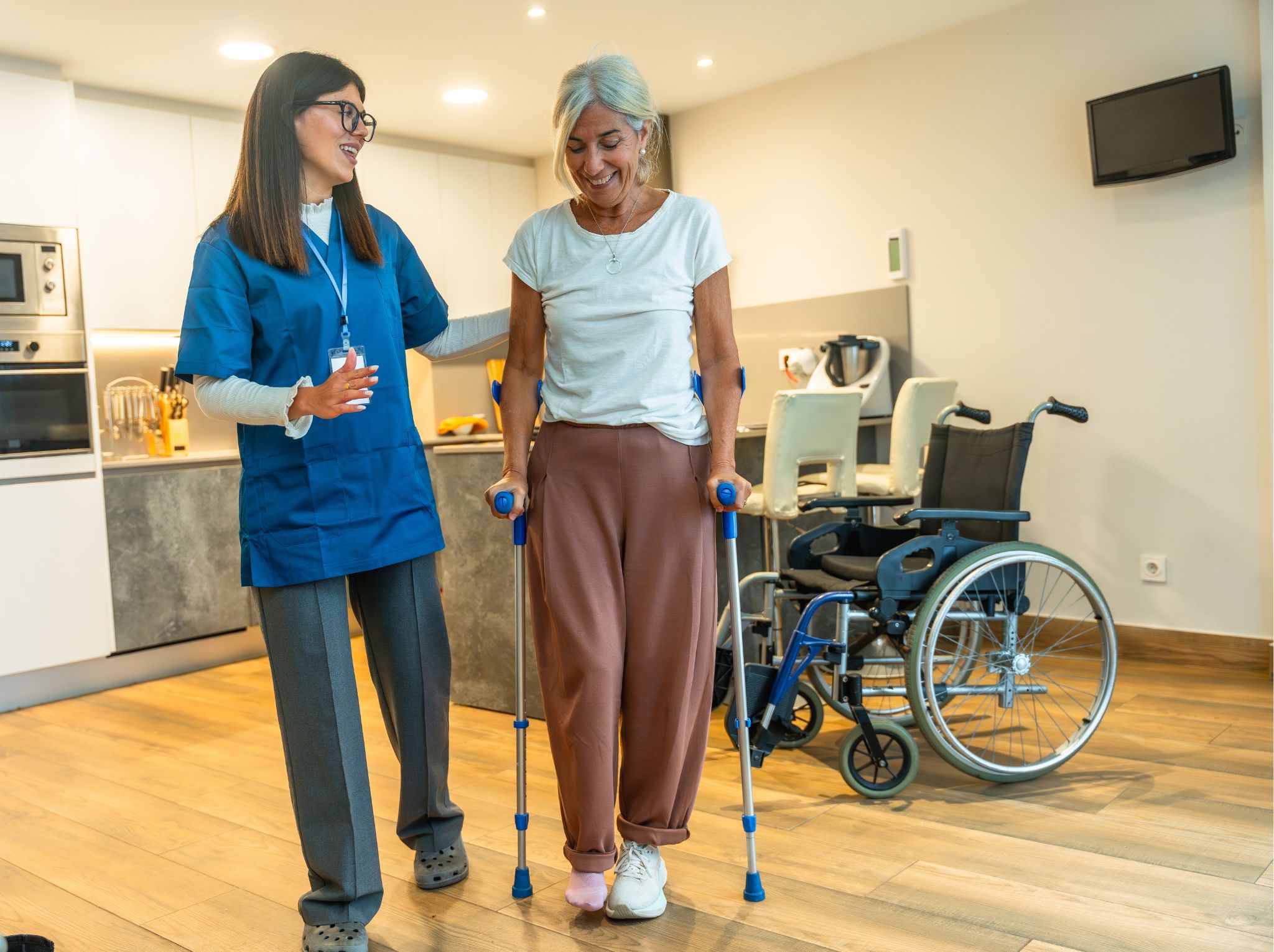
Most people don’t realize their loved one is losing independence until the signs are impossible to ignore: a missed meal, a bathroom fall, prescription bottles left untouched.
These aren’t just inconveniences. Untreated functional decline in seniors accelerates hospitalization, deepens cognitive deterioration, and strips away the dignity of aging at home. Research shows that roughly one-third of older adults experience at least one fall annually, and without proper intervention, that first fall often signals the beginning of a much steeper decline.
Senior occupational therapy services are one of the most clinically supported tools for reversing this trajectory, and at Wellspring Home Health, our occupational therapists deliver this care where it matters most: in the home.
This blog breaks down exactly how occupational therapy works, what it addresses, and why delaying it carries real consequences. From senior mobility improvement to fall-proofing the home environment, here’s what families need to understand.
Benefits of Occupational Therapy for Seniors
Occupational therapy is often misperceived as a treatment for individuals recovering from injuries. In reality, it’s a precision clinical discipline that evaluates how a person interacts with his or her environment and systematically rebuilds that interaction when it is disrupted by aging, disease, or disability.
What OT Actually Targets
Occupational therapists assess three categories of function:
- ADLs (Activities of Daily Living): Bathing, grooming, dressing, eating, toileting
- IADLs (Instrumental Activities of Daily Living): Cooking and meal preparation, medication management, housekeeping
- Environmental factors: Layout of the home, furniture height, lighting, floor surfaces
What makes senior occupational therapy services distinctly valuable is that they don’t just treat a condition; they restore function within a specific living environment. Home-based occupational therapy is a personalized intervention tailored to the environment, with the goal of positively influencing activity, participation, and quality of life in older adults.
The difference between OT and generic home care is specificity. Our occupational therapists at Wellspring don’t apply a standard protocol; they build a plan around the individual’s medical conditions, lifestyle, and home layout before assigning any intervention.
Think of it this way: a senior who can’t button a shirt isn’t just struggling with a fine motor task. They’re losing a piece of their identity, and that loss compounds faster than most families expect.
Daily Living and Mobility Support
Relearning the Basics, Strategically
When aging or a medical condition disrupts the ability to perform daily tasks, the instinct is to rely on family members for help. That creates its own problem. Seniors who are totally dependent on help lose motor patterning faster, have a steeper cognitive decline, and report a significantly lower quality of life.
Daily living assistance for seniors through occupational therapy works differently. The goal isn’t to do things for the patient; it’s to restructure how they do things for themselves. Adaptive techniques, compensatory strategies, and assistive devices are employed by therapists to help seniors stay active in their own routines.
What This Looks Like in Practice
| Task | OT Approach |
| Dressing | Long-handled reaching devices, button hooks, modified sequencing |
| Bathing | Shower chairs, adaptive grips, energy conservation techniques |
| Meal prep | One-handed cutting boards, ergonomic utensils, routine restructuring |
| Medication management | Pill organizers, reminder systems, coordination with care team |
| Transfers (bed to chair) | Proper body mechanics training, assistive rail recommendations |
Senior mobility improvement is central to this work. At Wellspring, our therapists create individualized exercise programs, offer balance and coordination training, and teach the correct use of mobility devices, all in the patient’s home, tailored to their actual movement patterns.
Research into occupational therapy’s effect on ADL independence found significant improvements in feeding, dressing, and continence care among seniors who received structured OT interventions compared to those who did not.
Fall Prevention and Home Safety
The Environment Is Almost Always Part of the Problem
Research shows that 30-50 % of falls are directly attributable to environmental hazards, which means the problem isn’t just the person; it’s the space they’re living in. Loose rugs, poor bathroom lighting, furniture that’s too low to rise from safely, and cluttered pathways are among the most common causes of falls that could have been prevented with a professional assessment.
Home safety for elderly individuals is one of the most evidence-backed applications of occupational therapy. Home modifications delivered by occupational therapists can reduce falls among high-risk older adults by up to 39%.
What a Home Safety Assessment Covers
Our occupational therapists evaluate:
- Tripping hazards and floor surface risks in all high-traffic areas
- Bathroom safety, grab bar placement, non-slip surfaces, shower entry.
- Bedroom layout and bed height relative to transferability.
- Lighting levels throughout the home, especially at night.
- Staircase railings, thresholds, and uneven surfaces.
- Kitchen setup for mobility-limited or vision-impaired seniors.
Multifactorial programs that combine home evaluations, physical activity, and education produce the strongest outcomes, including decreased functional decline, reduced fear of falling, and improvements in balance and strength. This is precisely why Wellspring’s home care model integrates occupational therapy with the broader care team, because home safety for elderly individuals isn’t a one-time fix. It’s an ongoing clinical priority.
A senior who falls once is twice as likely to fall again. The second fall is almost never minor.
Cognitive and Emotional Wellness
When the Mind and Body Decline Together
The relationship between physical function and cognitive health in older adults is not separate; it’s tightly linked. Seniors who lose the ability to perform daily tasks independently show accelerated cognitive decline. Conversely, structured occupational therapy that restores daily routines has a measurable stabilizing effect on mental function.
Our senior occupational therapy services address this directly. Occupational therapists who work with seniors managing Alzheimer’s disease, dementia, Parkinson’s disease, or post-stroke impairments use cognitive-oriented approaches embedded in daily activity. Rather than working on cognition in isolation, they use meaningful, task-based engagement, dressing, cooking, and organizing, as the vehicle for maintaining mental function.
Research shows that occupational therapy based on ADL cognitive stimulation has demonstrated a positive effect in increasing the independence of older adults with major neurocognitive disorders, with measurable improvements in tasks such as feeding and dressing.
There’s also the emotional dimension. Isolation, loss of purpose, and anxiety about declining function are all clinical risks, not just emotional ones. Regular occupational therapy sessions offer structured interaction, the achievement of goals, and the psychological boost of doing things independently again. At Wellspring, we understand that daily living assistance for seniors is more than just physical care. It is to have regained confidence.
Maintaining Independence Through Personalized Care
The families we work with in Seattle WA, Tacoma, and surrounding areas often come to us after a crisis, a fall, a hospitalization, or a sudden change in their loved one’s ability to manage at home. What they discover is that the right care, initiated early, could have prevented much of that deterioration.
That’s not a criticism; it’s a reality of how families navigate aging. Most people wait until the problem is undeniable. By that point, recovery is harder, and the window for preserving high-level independence has narrowed.
Our occupational therapists at Wellspring work closely with each patient’s physician and family members to coordinate a personalized plan of care from the outset. We assess the home, evaluate functional capacity, identify environmental risks, and build a care plan that addresses mobility, daily function, safety, and cognitive wellness in parallel, not sequentially.
What sustains progress isn’t a single visit. It’s an ongoing relationship between the patient, the care team, and the family. We give family members the knowledge and instructions they need to support follow-up care between visits, closing the gap between professional visits and everyday life.
Aging Doesn’t Have to Mean Surrendering Independence
Occupational therapy is one of the most clinically grounded, practically impactful services available in home care today. For seniors managing age-related decline, chronic conditions, or post-hospitalization recovery, it directly addresses the daily functional losses that, left unmanaged, lead to dependence, injury, and diminished quality of life. Senior mobility improvement, safer living environments, cognitive support, and restored daily routines are all within reach with the right clinical team in place.
At Wellspring Home Health Center, our occupational therapists, skilled nurses, physical therapists, and aides work as a coordinated team to deliver senior occupational therapy services that are built around each individual’s needs. We treat every patient like family, not a case number, and we bring that care directly into the home. Serving Seattle, WA, Tacoma, Wasilla, and Anchorage, we’re here for families who want more than a generic care plan.
If your loved one is losing ground on daily function, don’t wait for the next fall to make the call. Reach out to Wellspring Home Health Center today at (253) 625-7606 and let us build a personalized plan that protects their independence and your peace of mind.