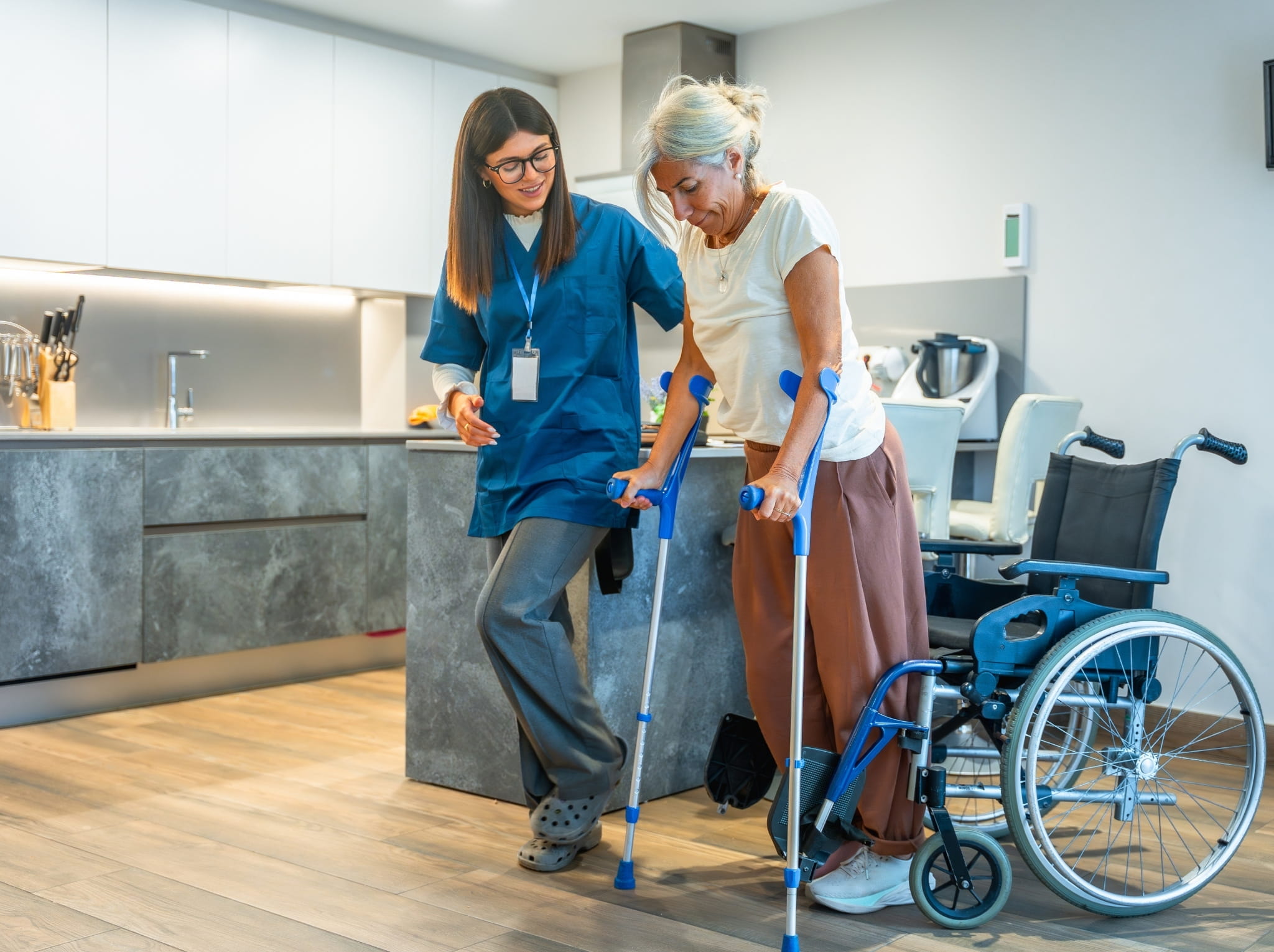
There is a moment every family dreads but rarely sees coming: the moment someone who raised you, protected you, and never once asked for help, quietly starts needing it every single day. What starts out as a little stiffness can quickly turn into full dependence, and the time to step in gets shorter than most families think. Every month without proper elder care support increases the risk of a fall, a hospitalization, or a permanent loss of the life your loved one worked hard to maintain.
At Wellspring Home Health Center, we see this pattern every day, and we know how to stop it before it becomes irreversible.
This blog explains what mobility problems really look like in everyday life, how to make the home safer, which aids work and which don’t, when therapy really helps, and when professional care is no longer an option.
What Mobility Challenges Look Like in Daily Life
Most families notice the big things, like a fall, a trip to the hospital, or suddenly not being able to walk. What they don’t see are the smaller, earlier signs of mobility issues in seniors.
The Smallest Tasks Become the Hardest
Long before a fall happens, mobility loss shows up in small moments, such as the hesitation before standing up, the tight grip on a doorknob just to stay steady, the decision to skip a glass of water rather than risk carrying it across the room. The real danger is when someone starts to avoid these things, like skipping meals because cooking seems dangerous or not bathing because the tub is too hard.
Mobility challenges worth watching for:
- Holding onto walls or furniture while walking through the house
- Sitting down heavily or needing multiple attempts to stand
- Shuffling instead of lifting feet while walking
- Avoiding stairs entirely, even to reach their own bedroom
- Complaints of dizziness or “feeling off” without a clear cause
These are not signs of aging gracefully. These are signs of danger.
It’s not just about movement. It’s about whether your loved one can live their life safely, or whether they’re silently managing a risk that’s growing every single day.
Making the Home Safe and Accessible
Most falls happen at home, not outside or in clinics, but in rooms that have quietly become dangerous. To improve home safety for seniors, you need to look at the environment the way an occupational therapist does: critically, practically, and with the senior’s specific limitations in mind.
Safety Risks Don’t Always Look Dangerous
A throw rug looks harmless. So does a lamp cord crossing a walkway, or a bathroom with no grab bars. But for an older person with weak legs or bad depth perception, these are real dangers.
| Area | High-Risk Element | What to Do Instead |
| Bathroom | Slippery floor, no support bars | Non-slip mat, grab bars at the toilet and shower |
| Bedroom | Low bed height, dim lighting | Adjustable bed rail, motion-sensor nightlight |
| Kitchen | Reaching overhead for items | Reorganize, keep essentials at counter level |
| Hallways | Loose rugs, poor lighting | Remove rugs entirely, install bright pathway lights |
| Stairs | Handrail on one side only | Add rails on both sides; consider a stair lift |
An occupational therapist can walk through the home and catch hazards that family members normalize over time because they’ve lived with them.
Helpful Mobility Aids and Equipment
A cane set at the wrong height, a wheelchair without the right support, or the wrong walker can make things worse, not better. The first step in elderly mobility assistance is to find the right tool for the job.
- Standard cane: For mild imbalance; must be the correct height, or it throws off posture
- Rollator walker: For moderate weakness; must have locking brakes and a seat for rest
- Transfer belt: Used by caregivers to assist with sitting, standing, or repositioning safely
- Stair lift: For multi-level homes, when climbing stairs has become unsafe
- Raised toilet seat: Simple, affordable, and one of the most impactful changes you can make
Before you choose an aid, always have a physical or occupational therapist evaluate the senior. This is not a decision that works for everyone.
Care is about dignity. The right mobility aid does not make someone look weak; it gives them back the ability to move through their own home on their own terms.
Daily Habits That Actually Reduce Fall Risk
Prevention isn’t just one thing you do; it’s a way of life. Senior mobility support is most effective when it is built into the routine, not added on top of it.
What Actually Works
- Sit on the edge of the bed for 30 seconds before standing up. This alone stops dozens of falls caused by sudden drops in blood pressure.
- Wear well-fitted, non-slip footwear indoors; socks on hardwood floors are a leading cause of falls
- Check your medications regularly because dizziness is a common side effect that goes untreated for months.
- Place necessary items at waist height to eliminate bending and reaching
- Schedule rest into the day intentionally; fatigue is a significant fall risk that caregivers often overlook
Caregiver support for seniors is most effective when caregivers are consistent, don’t rush, and know how to help without taking over. There is a big difference between moving for someone and helping them move.
Why Exercise and Therapy Change Everything
Research indicates that targeted exercise may lower the risk of falls in seniors by as much as 23%. That number comes from the World Health Organization’s global fall prevention data. It only applies to strength and balance training, not all activities.
Senior care at home that includes physical therapy is not a luxury; it is one of the most proven ways to help.
What each therapy type addresses:
- Physical Therapy: Rebuilds strength, endurance, and safe movement patterns, especially after surgery, stroke, or a fall
- Occupational Therapy: Retrains the ability to perform daily tasks safely, and redesigns the home environment to match current ability
- Speech Therapy: Addresses swallowing and communication issues that accompany neurological conditions affecting mobility
Consistency is more important than intensity. Every time, short daily sessions are better than longer ones that happen once in a while.
When Professional Support Is No Longer Optional
People often wait until there is a problem before asking for help. At that point, there are fewer options, it takes longer to get better, and it costs more emotionally.
Reach out for in-home elder care services when:
- A fall has already occurred, even once
- The senior expresses fear of moving around their own home
- Bathing, dressing, or meal preparation have become unsafe
- A primary caregiver is approaching burnout
- A recent hospital discharge has left the senior weakened or disoriented
Doing less doesn’t keep seniors independent at home; having the right support in place before it becomes necessary does. In every way, waiting costs more.
Taking the Next Step Toward Safer, Dignified Living at Home
Problems with mobility don’t go away on their own. They build up slowly, quietly, and steadily until a fall, a hospitalization, or a loss of independence makes them make a choice that could have been made months earlier. The good news is that with the right environment, the right equipment, and the right professional support, seniors can remain safely at home far longer than most families expect. You can start making every change talked about in this blog right away, from grab bars to therapy to daily habits.
At Wellspring Home Health Center, we bring together skilled nurses, physical and occupational therapists, personal care aides, and medical social workers to provide comprehensive elder care tailored to each patient’s specific conditions, home, and goals, not a generic plan that fits everyone. Families in Seattle WA, and across Wasilla, AK, Anchorage, AK, and Tacoma, WA, trust our team to work alongside primary care physicians and ensure that senior care at home is safe, consistent, and genuinely making a difference in daily life.
Call Wellspring Home Health Center at (253) 625-7606 if your loved one is having trouble moving around or if you are already taking care of them on your own. One conversation can change everything when you get the right help.